Mastering Your Budget: How Do I Calculate a Gift Budget for Dads Hampers?
Gift giving can feel like navigating a financial minefield—you want it to be thoughtful, impressive, and most importantly, affordable. We’ve all been there: staring at beautiful curated boxes of artisanal goods, scrolling through prices, and suddenly feeling overwhelmed by the sheer volume of options. You are trying your best, and remember that the sentiment behind the gift always outweighs the dollar amount. But if you're standing in the crosshairs of "Dad Gift Season" and wondering exactly how do i calculate a gift budget for dads hampers?, take a deep breath. It’s simpler than it looks. This guide breaks down the process into manageable, stress-free steps so that your thoughtful hamper feels both luxurious and responsible to your wallet.
Establishing Your Financial Starting Point and Scope
Before you even look at artisanal mustard or gourmet coffee beans, you need a solid foundation: your total budget. Think of this number as the gravitational center for your entire gifting project—everything else must orbit it. The first mistake people make is letting the idea of the hamper dictate the spending limit. Instead, start with the hard cap.
Once you have that maximum figure, you need to account for more than just the contents. Are you buying gift wrapping? A personalized card? Shipping costs, if applicable? Always allocate a small percentage—say, 10%—of your total budget specifically for these overhead "touch points." This ensures that when you finally assemble and present the hamper, it looks polished, not like an afterthought pile of goods. Understanding this initial constraint is the most crucial step in figuring out how do i calculate a gift budget for dads hampers?.
Deconstructing the Hamper Contents: Itemizing Costs Accurately
This section moves from abstract budgeting to concrete arithmetic. A hamper isn't just one price tag; it’s an equation built of many smaller components. To avoid accidentally overspending on a single, magnificent-looking item, you must tackle this Australian Gift Delivery systematically.
Here is the formula for accurate calculation:
- Total Budget ÷ (Desired Number of Items) = Average Item Cost.
While that sounds like a mathematical mandate, its real purpose is to establish guardrails. If your budget dictates an average item cost of $20, but one specific artisanal cheese costs $45, you know immediately where you need to scale back on another element—perhaps the accompanying crackers or small jar of chutney.
Always remember to factor in bulk discounts. Are you buying these items from a specialty shop that offers a "buy three, get one free" deal? Or are you sourcing some elements yourself and assembling them into a more budget-friendly presentation? Knowing where your best deals lie can save you hundreds without compromising quality. Does the final price tag truly reflect the joy inside?
Balancing Perceived Value Against Actual Cost
This is perhaps the trickiest, yet most important, part of budgeting for gifts. We are wired to equate higher cost with higher value, and this trap costs many people peace of mind (and money). The goal isn't maximum dollar expenditure; it’s maximum thoughtfulness.
A wonderful metaphor for this concept is comparing a lavishly wrapped gift that contains only mediocre items versus a simply presented hamper filled with things your dad genuinely loves. The latter will always win in sentiment, and often, the cost differential is negligible.
How can you achieve high perceived value without blowing the budget? Focus on curation. Rather than buying five different, expensive-looking snacks from various brands, buy one standout, premium item (like a specialty roast coffee) and pair it with three simple, high-quality items that complement it. This gives the illusion of variety while keeping your spend concentrated and manageable.
We once worked on a gift hamper for a father who was notoriously fussy about taste. His initial budget estimate suggested he needed $300 worth of "high-end" snacks. After we audited his actual preferences, we scaled back to a solid $120, focusing intensely on three types of things he actually enjoyed. The result? He was ecstatic and complimented the selection, not the price point.
Contingency Planning: Preparing for the Unexpected Costs
No budget survives first contact with reality—and gifting is no exception. What if your favorite local chocolatier runs out of a particular truffle blend just days before you planned to buy it? Or what if shipping rates suddenly spike?
A smart approach involves building in contingency funds. Dedicate 15% of your total budget as a buffer, accessible only for unforeseen costs or last-minute substitutions. This cushion is your armor against panic buying and unexpected price hikes. It provides the mental flexibility to pivot without feeling like you’ve failed at the budgeting process.

If you approach this with a methodical mind—treating it less like impulse shopping and more like a supply chain project—you will find that calculating how do i calculate a gift budget for dads hampers? becomes a straightforward, satisfying exercise in resource management.
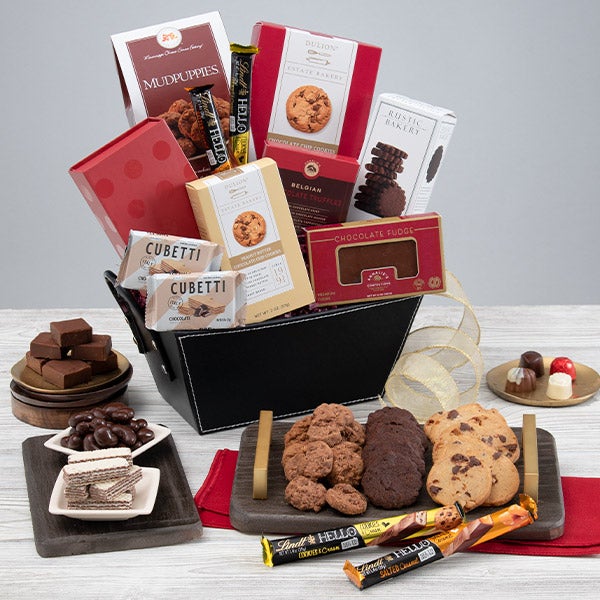
Crafting Lasting Impressions Beyond the Basket
The true measure of a thoughtful hamper is not how much you spent, but how well it tells a story about your dad. As you begin to gather inspiration and refine your numbers, shift your focus from merely compiling ingredients into a box, to curating an experience. Consider adding elements that encourage activity:
- A small bottle of local craft beer paired with a recipe card for grilling.
- A paperback book genre aligned with his hobbies (history, gardening).
- High-quality socks or a unique pair of reading glasses.
By thinking about the moments your dad will spend enjoying these items—the smell of the coffee while he reads, the taste of the cheese paired with wine—you move past simple arithmetic and into artistry. Start planning those complementary elements now, knowing that a thoughtful plan is always more valuable than an overly expensive impulse purchase.